
Social value is the extra benefit a contract brings to the people and places around it, beyond the work itself. Public buyers score it as part of the tender, and the rules for central government are about to change.
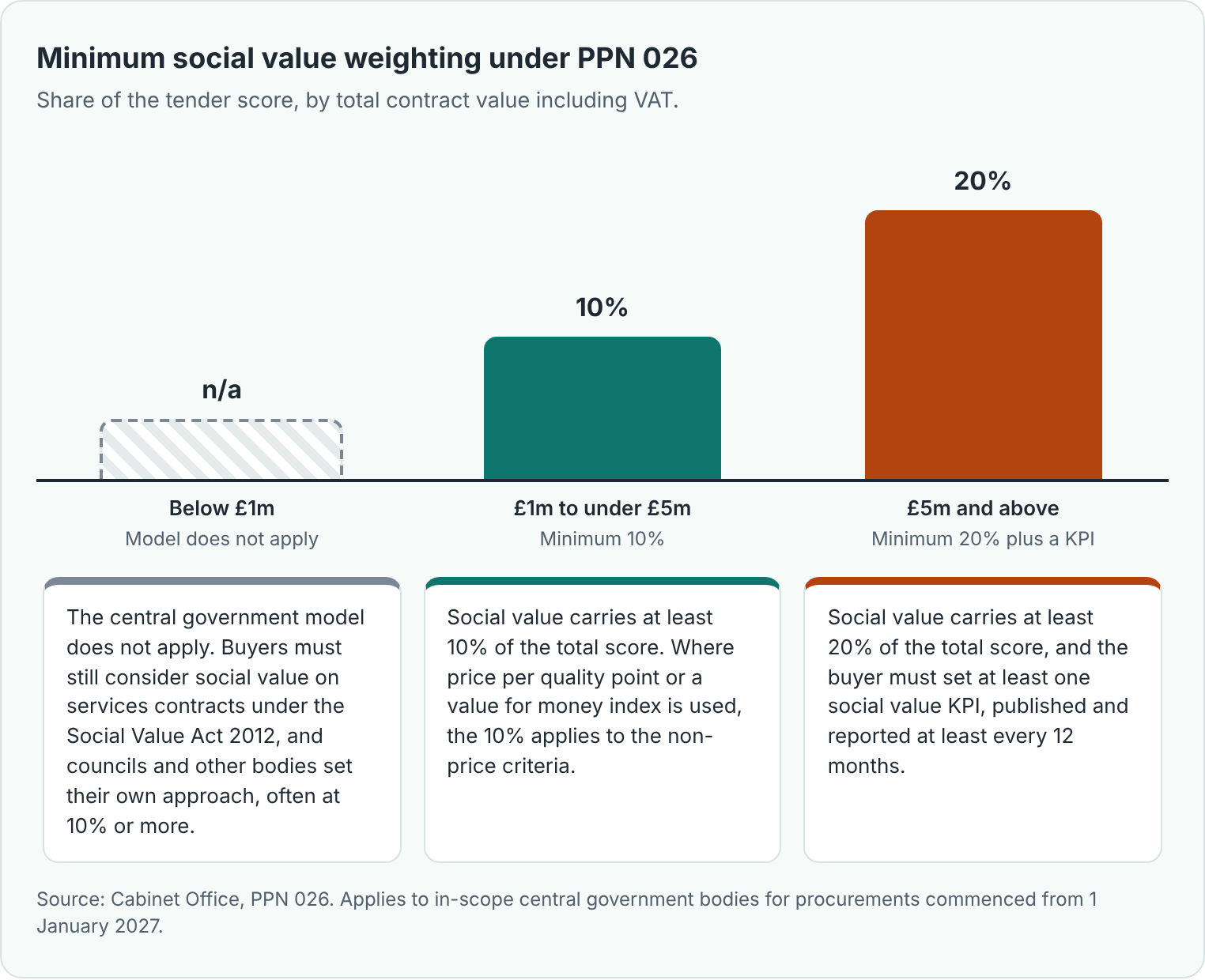
At the moment, central government works to Procurement Policy Note 002, which sets a minimum of 10% of the score for in-scope contracts above the procurement threshold. A new note, PPN 026, was published in August 2026 and applies to procurements that start on or after 1 January 2027. It covers contracts worth £1 million or more including VAT, with a minimum weighting of 10% up to £5 million and 20% from £5 million upwards. It also narrows the model to two outcomes, good jobs and skills.
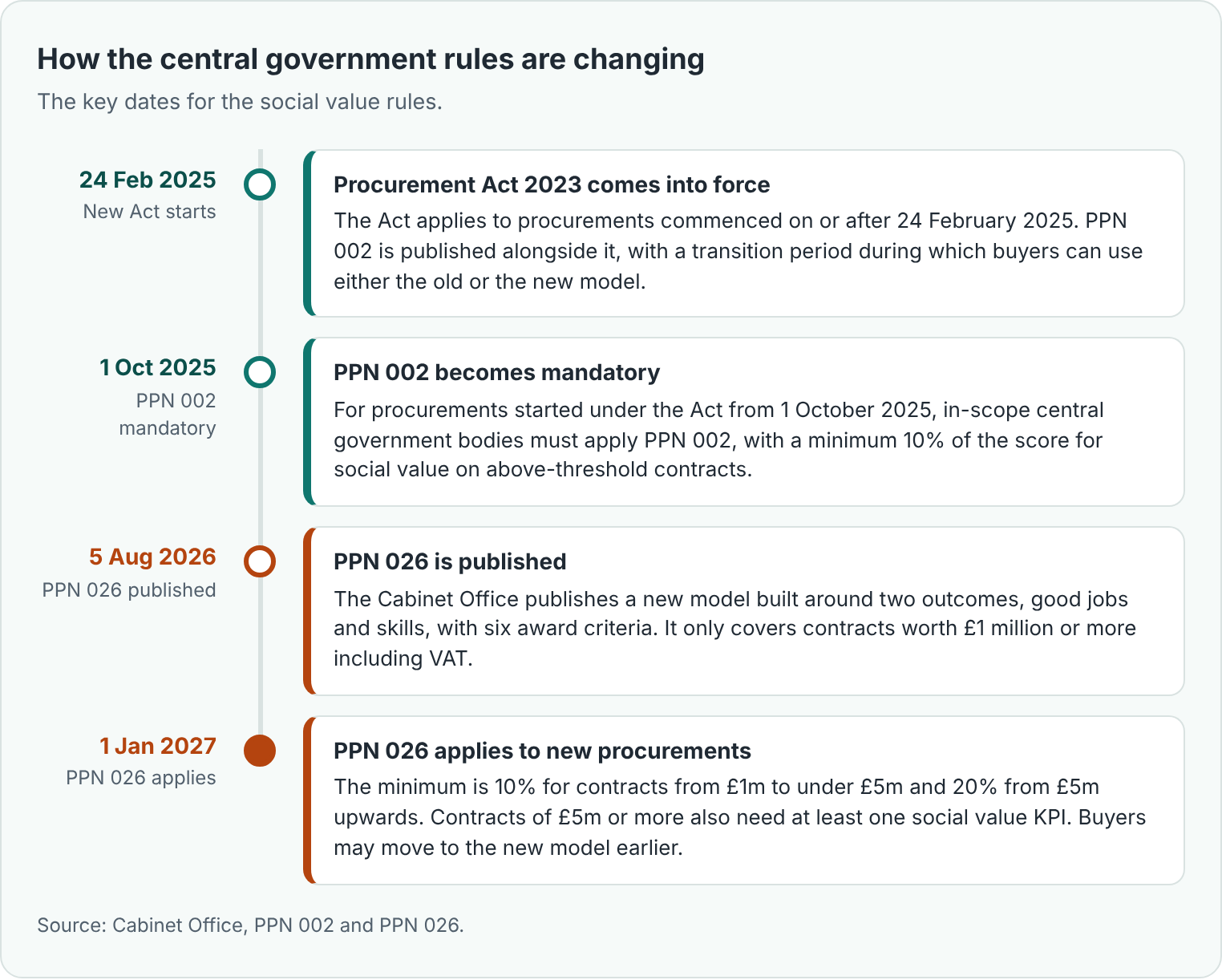
For a small contractor this cuts both ways. Many smaller central government contracts will sit below the £1 million line, so the standard model will not apply to them. Councils, the NHS and other buyers set their own approach though, and many local authorities already use a 10% weighting or higher. Buyers are also still required to consider social value on services contracts under the Social Value Act. So wherever you bid, a strong social value answer can move you up the ranking.
Evaluators are not looking for the biggest promise. They are looking for the most credible one.
What scores well
- Relevance to the contract. Commitments linked to the place and the work, such as local hiring for a local job or apprenticeships in the trades you use.
- Specific and measurable. "Two apprentices for the duration of the contract" beats "we support young people".
- Something extra. Buyers want benefit that goes beyond what the contract already requires, so avoid pitching things you would do anyway.
- A delivery plan. Who is responsible, when it happens, and how you will report it.
- Evidence you have done it before. One real example from a past contract, with numbers and dates, is worth a page of intentions.
What the difference looks like
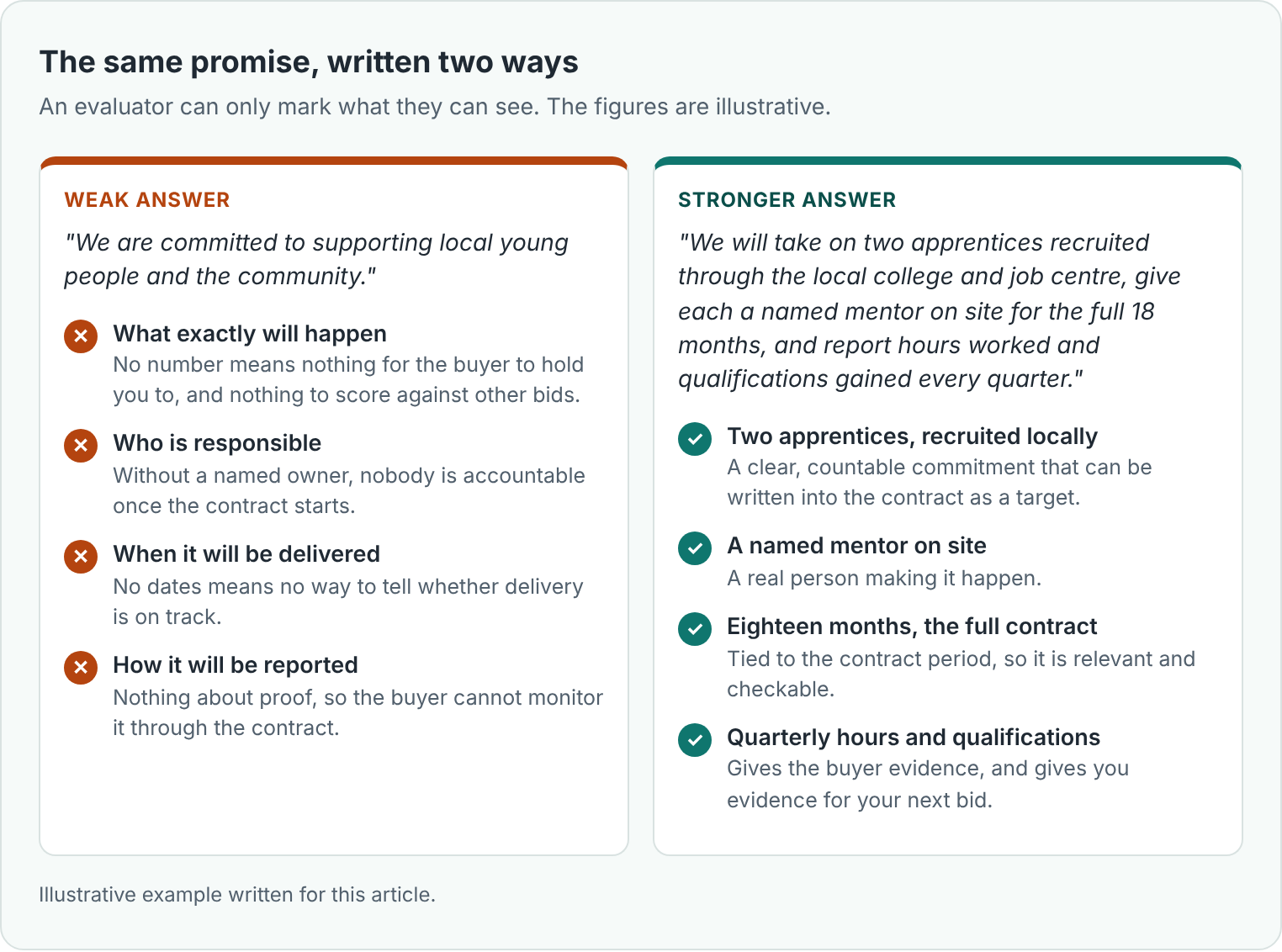
A weak answer says, "We are committed to supporting local young people and the community."
A stronger answer says, "We will take on two apprentices recruited through the local college and job centre, give each a named mentor on site for the full 18 months of the contract, and report hours worked and qualifications gained to you every quarter."
Both mean well, but only the second can be marked with confidence, because the evaluator can see what will happen, who will make it happen and how it will be checked. (The figures here are illustrative.)
Commitments that suit small contractors
- Skills and apprenticeships. Apprenticeships, work placements and training, ideally open to people who face barriers to work, such as young people not in education, employment or training, and care leavers.
- Good jobs and fair conditions. Paying above the statutory minimum, offering flexible working and supporting staff to progress, all of which the new central government model rewards.
- Local labour and suppliers. Agree a percentage of spend with businesses within a set radius.
- Environment and community. Lower-emission plant, waste diverted from landfill, reduced deliveries, volunteer days or a small project with a local group. The new central government model does not centre on these, but many other buyers still value them, and they strengthen the rest of your tender.
Report what you promised
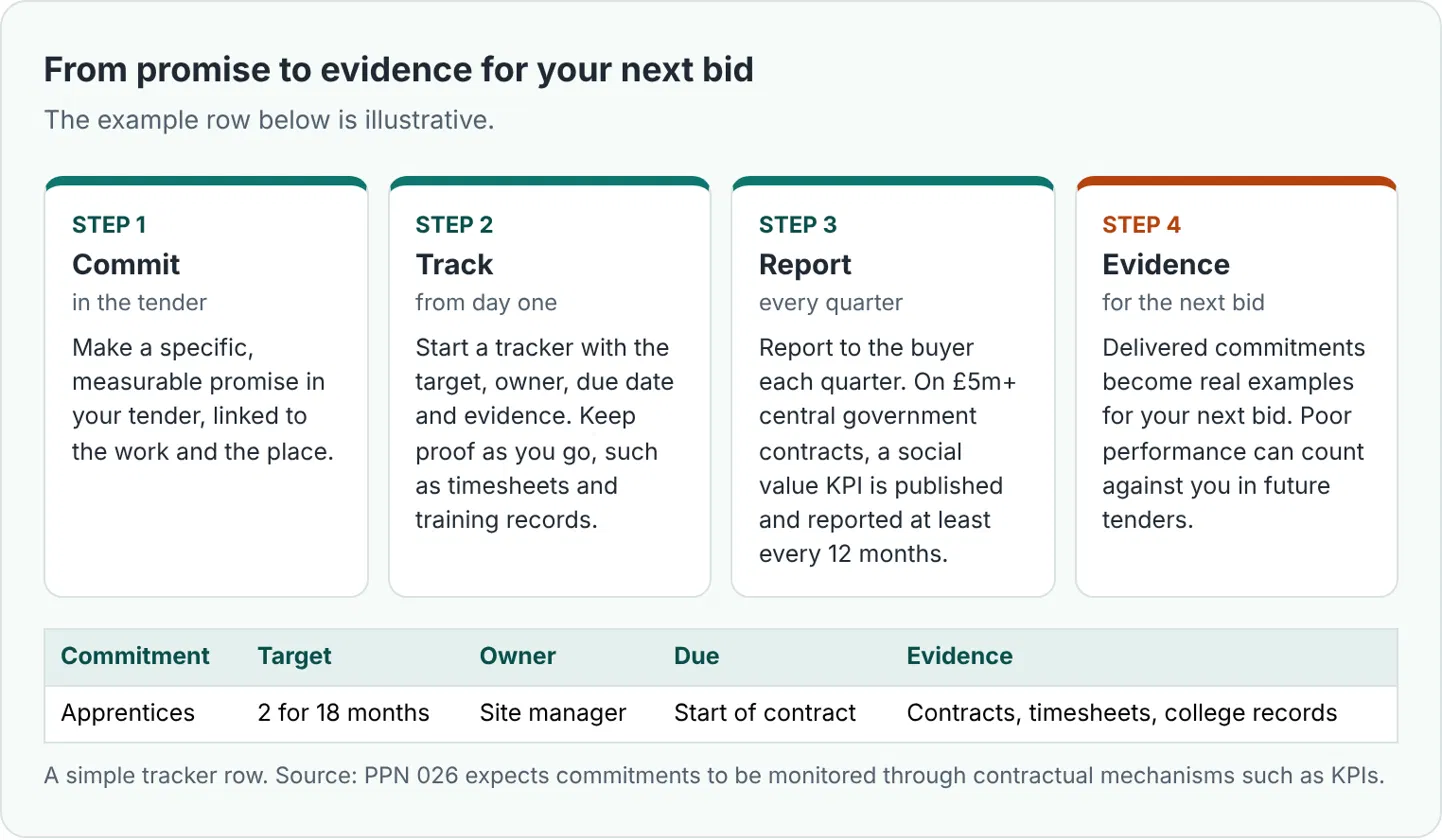
Commitments become contract obligations, and buyers are expected to track them through the contract, usually as key performance indicators. On central government contracts of £5 million or more, at least one social value KPI will be set, published and reported at least every 12 months. Poor performance can also be weighed when a buyer decides whether you can bid for future work.
So treat social value like any other deliverable. Keep a simple tracker from day one with the commitment, the target, who is responsible, the due date and the evidence, and report quarterly. Hold on to the proof as you go, such as timesheets, training records and photos taken with permission.
Delivered commitments then become the evidence for your next bid. Promise what you can deliver, deliver it visibly, and the next tender gets easier to win.
Where Qonstrue can help
Good records are what turn a promise into evidence. Qonstrue helps contractors measure and report the data behind their commitments, including energy, waste and emissions, so that what you tell a buyer is something you can show.
Sources and further reading
- Cabinet Office, PPN 026, The Social Value Model (August 2026)
- Cabinet Office, PPN 002, Taking account of social value in the award of central government contracts